 01257 368050
 Email Us
 Visit Us
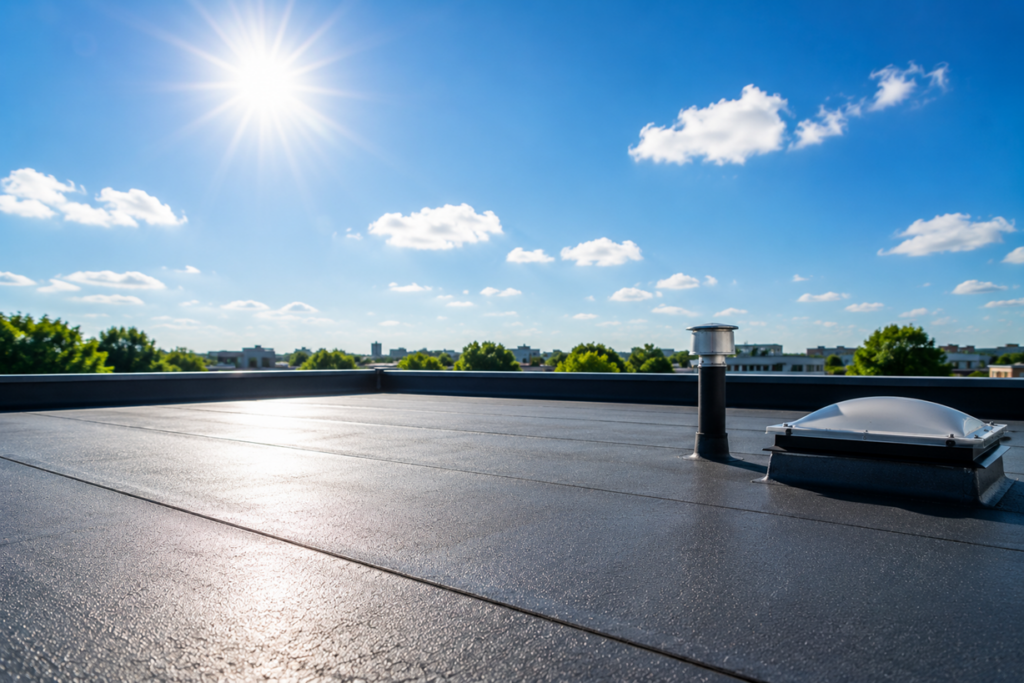
As temperatures climb during the warmer months, flat roofs are exposed to conditions that are often more extreme than many people realise. While we may enjoy the sunshine at ground level, roof surfaces can become significantly hotter than the air temperature around them, placing constant thermal stress on the materials that protect our buildings. So, what actually happens to a flat roof during periods of hot weather, and why does it matter?
Why do flat roofs get so hot in summer?
Flat roof surfaces are exposed directly to the sun for long periods throughout the day. With little shade and a broad surface area, they absorb and retain heat very efficiently.
This means that on a bright, sunny day, a flat roof can easily reach temperatures far higher than the ambient air temperature. Darker roofing membranes in particular tend to absorb more solar radiation, which causes the surface to heat up rapidly. Even modern reflective systems, while designed to reduce heat gain, will still experience a significant rise in temperature during prolonged warm spells.
This build-up of heat is a completely normal environmental effect, but it places roofing systems under conditions they must be specifically designed to withstand.
What happens to roofing materials in high temperatures?
High temperatures can have a notable impact on roofing materials as they physically respond to temperature changes. As the surface of a flat roof heats up during the day, the materials will naturally expand. But then when the temperatures drop overnight, the roofing materials will contract.
This is all part of the expansion and contraction cycle, and is a normal part of a roof’s life cycle. However, this repeated process can contribute to gradual wear and tear as the repeated movement places subtle stress on joints, seams, and interfaces within the roofing system.
As a result, modern flat roofing membranes and systems are engineered with this expansion and contraction cycle in mind. Designed to be flexible enough to accommodate thermal movement without cracking or losing integrity, materials such as single-ply membranes, liquid-applied systems, and high-performance bituminous products are all engineered to withstand repeated heating and cooling cycles.
How does heat affect the performance of a flat roof?
A flat roof that has been professionally installed by a trusted team will continue to perform effectively in hot conditions, but sustained heat can influence how the system behaves over time.
One of the key considerations is thermal stress. As different layers within the roof build-up heat at different rates, slight movement can occur between materials. This is why correct installation and compatibility between components is so important, and why your flat roof system should always be installed by a professional team.
A well designed and professionally installed flat roofing system is specifically designed to resist UV exposure, thermal cycling, and seasonal extremes, ensuring long-term durability.
What role does UV exposure play?
As well as the heat itself, ultraviolet (UV) radiation is another major factor affecting flat roofs during sunny weather. UV rays gradually break down surface materials at a molecular level, which can lead to fading, brittleness, or surface degradation over time.
This is why many modern roofing systems include UV-resistant finishes or protective surface layers. These are designed to act as a barrier, reducing the impact of direct sunlight and extending the overall lifespan of the roof.
Regular maintenance and inspections also play an important role in identifying early signs of UV-related wear before they develop into more serious issues.
So what happens to a flat roof during extreme heat?
Although often overlooked, flat roofs are constantly working hard in the background to protect buildings from the elements. During hot weather, they absorb heat, withstand UV exposure, and manage daily cycles of thermal expansion and contraction, while maintaining a watertight barrier. Modern roofing systems are designed to cope with these demands, but like any part of a building, they benefit from proper installation, regular maintenance, and occasional inspection.
At Enviroply Roofing, we understand the pressures that UK weather places on flat roofing systems throughout the year. If you would like expert advice or support with your flat roof, we are here to help.